Gyaru fashion was considered to be nonconformist and rebelling against Japanese social and aesthetic standards during a time when women were expected to be housewives and fit Asian beauty standards of pale skin and dark hair. Early in its rise, gyaru subculture was considered racy, and associated with juvenile delinquency and frivolousness among teenage girls. The concept of “gyaru mind”—emphasizing confidence, independence, and resistance to social conformity. The term gyaru is a Japanese transliteration of the English slang word gal. Gyaru have their own themed cafés. Similar to maid cafés, waitresses wear gyaru attire and exhibit exaggerated personas in addition to other gyaru-themed rituals. For instance, a general rule in gyaru cafés is the prohibition of polite honorific speech (敬語, keigo). Click here for a Gyaru speech guide!
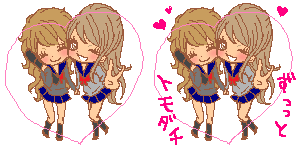
Kogal/kogyaru- a gyaru that is in highschool and wears a school uniform.
Magogyaru / chugakkou gyaru (中学校ギャル)- a gyaru that is in junior high.
Mode- a classy and high fashion subset of Gyaru
Rokku- a style of Gyaru that's inspired by 2000's goth, rock, and scene fashion
Himegyaru- a frilly and glamorous Lolita inspired Gyaru. Hime means princess.
Himekaji- a toned down, more mellow Himegyaru.
Goshikku- a Gothic style of Gyaru similar to Rokku, but has an almost exclusively monotone pallette.
Agejo- A mature and sensual/sexy style of Gyaru.
Ganguro/kuro gyaru (黒ギャル)- a flamboyant style of Gyaru characterized by a deep artificial tan, bleached blonde/silver hair, and heavy white/black eyeliner.
Manba- more intense evolution of the ganguro style.
Yamanba- a vibrant and super tan-heavy Gyaru that developed from Ganguro. has a tropical vibe. people often mistake this for "tropical gyaru" (which doesnt exist).
Romanba- Ro(mantic)-Manba, uses many romantic elements.It contain many frills so it can considered a mesh of Himegyaru and Manba
Banba- a Barbie-like style of Gyaru,can be considered a toned down version of Manba
Gyaru mama- a gyaru who proceeds to wear gyaru fashion even after having kids.
Ora Ora (オラオラギャル)- Rebellious biker girls. They tend to have tattoos and piercings.
Haady gyaru (派手)- The scene neon Mcbling style of Gyaru. Translates to "flashy". Inspired by Lisa Frank.
Ane (姐)- the 'rebellious sister' of Onee-gyaru, Ane Gyaru is a mature style similar to Onee, with its own twist. The style is associated with a rough attitude, and it is far more common to see tattoos and piercings in this style compared to many other gyaru styles. Because of the mature nature of the style, this sub-style is seen often on gyaru anywhere from early twenties to mid thirties. The style also holds some similarities to Ora Ora. Ane gyaru sticks very true to the rebellious nature of the gyaru lifestyle.
Nanchatte Seifuku- means "pretend school uniform" and refers to people who utilize their school uniforms or fake school uniforms as part of their style. It is not a style limited to gyaru, but some gyarus take part in it. They are sometimes mistakenly labelled Kogal in the West.
Saike Gyaru- derived from the typical bohemian fashion style, with a heavy focus on 'peace and love' and featuring lots of earthy tones, peace symbols, flowers and braids. Its masculine counterpart is named Derikka (デリッカー).
Shiro Gyaru (白ギャル; White-skinned gal), also known as Ganjiro (ガン白), is an umbrella term for gyarus who choose to not tan. A Shiro gyaru is someone who follows all Gyaru-Kei trends but choose not to tan their skin in any way whatsoever.
Yami Kawaii- Dark and sickly cute, medical imagery.
Yume Kawaii- Dreamy cute. Reminds me of little twin stars.
Gurokawa- Creepy cute. This is one of my favorites. It's basically just cutecore. Mixing horror with cute little anime girls.
Tenshi kawaii- angel themed kawaii, like kangel!
Dokukawaii- centers around themes related to toxicity and bright colors.
Jirai Kei- Think Ame-Chan from NSO. Jirai Kei, literally meaning "landmine type", is a fashion subculture originating from Japan's Kabukichō and spread in popularity in the early 2020s, which incorporates dark and kawaii styles. Described as similar to Lolita and Preppy fashions in clothing, it's often paired with accessories with bow, heart, cross, and lace elements, and wear platform shoes. It highlights femininity, cuteness, and fosters a sense of loveliness with the perfect balance of cool. The stereotype behind this subculture is that cute, hyper-feminine young women who dress in darker fashion styles have personalities that do not match their appearance. Rather than being sweet and kind, they are said to be violent and obsessive. Girls in this subculture add heavy filters and editsto their photos. Pale pink and white filters can add a slight haze to all of their images, and they are often decorated in virtual stickers with Jirai Kei motifs. They also use face and body editing to the point of an unnatural appearance. Impossibly large eyes with anime proportions, making skin more pale, and making their bodies thinner and longer are extremely common in photos. This is with the goal of appearing eerie and puppy-eyed, diverging from the trend of "pien" makeup on Japanese tiktok. The color palettes of Jirai Kei is mainly white, black and pastel pink, though on occasion red, blue and grey is also used. To contrast all of the sweet and girly visuals, violent imagery is often shown. Box-cuters, raz0rz, and pocket knifs are commonly featured in outfit posts.
Ryousangata (量産型)- means "mass-produced". is used to describe a person or group of people who wear clothing that is trendy at the time.
often associated with idol fans, characterized by a, cute, and uniform aesthetic. Kind of like a pastel pink version of Jirai Kei.
Fairy Kei- a youthful style based on 1980s fashion that evokes a dreamy, nostalgic feeling. Outfits are made up of pastel colors, angels, toys and generally cute motifs and elements and accessories from Western toy lines of the 1980s and early 1990s, such as Polly Pocket, My Little Pony, Strawberry Shortcake, Rainbow Brite, Popples, Lady Lovely Locks, Barbie, Wuzzles, and Care Bears. Pastel-colored hair is common, although natural hair is also popular, and hairstyles are usually kept simple and decorated with anything cute or pastel; bows are a common theme. Some common items used in a Fairy Kei coordinate include vintage sweaters, cardigans, varsity jackets, tutus, mini skirts, tights, over-the-knee socks, sneakers, and tea party shoes.
Uchuu Kei is a substyle of fairy Kei that contains uchuu (outer space) and uchuujin (space alien) elements. Neon and cold hues are more popular, especially when combined with black, metallics, and even futuristic components.
Decora- Lots of color, like a walking rainbow. Decora Kei is to pile on many layers of accessories, such as jewelery, clips, and belts, hair clips, glasses, rings, bracelets, necklaces, fake nails , stickers, stockings, legwarmers, arm warmers, and knee socks.
Lolita
Gothic Lolita (Gosu Rori) - Lolita with a heavy influence from the Eastern and Victorian Goth style. Often characterized by dark colors and accessories adorned with motifs such as skeletons, bats, spiders, and other popular gothic 'icons', such as characters from Tim Burton films. Victorian iron gates and architectural designs are also often seen in dress prints. Bonnets, rectangle headdresses, and brooches are popular accessories for Gothic Lolita.
Sweet Lolita (Ama Rori)- the most childlike style, mostly characterized by baby animals, fairy tale themes, and innocent, childlike attire. It was originally inspired by Victorian children's clothing and the kawaii culture that is very prevalent in Japan. Pastel colors are often used, although some dresses or skirts may feature darker or muted colors as well. Large head bows, cute purses, and stuffed animals are popular accessories for Sweet Lolita.
Classic Lolita - a sub-style more closely resembling the historical fashion of the Rococo or Victorian eras. The colors that are used in this look are usually muted, thus giving this sub-style a more mature feel. Floral prints and solid colors are common, although fancier prints are not unheard of as well. Small head bows, bonnets, rectangle headdresses, and hair corsages are popular accessories for Classic Lolita.
Fruits Lolita- very colorful clothes with fruity patterns
Country Lolita- its in the name
Guro Lolita- horror/bloody doll look
Vkei / Visual Kei
Visual Kei is a subculture created in the mid-1980s by Japanese musicians consisting of striking makeup, unusual hair styles, and flamboyant costumes, similar to Western glam rock and glam metal. Androgyny is also a popular aspect of the style. Some of the more well-known and influential artists of the style include X Japan, Luna Sea, Versailles, The Gazette, Mejibray, Royz, L'Arc-en-Ciel, An Cafe, Malice Mizer, and Diaura.
Oshara Kei- The phrase Oshare means “fashionable” or ‘fashion conscious. The aesthetics gained popularity around the start of 2001. Oshare Kei, in contrast to Visual Kei’s darker tone, is all about bright colors, brightness, and cuteness.
Modern
Bihaku- "white beauty". The opposite of Gyaru. Trying to make skin as light as possible.
Shoujo girl- Western reinterpretation of 2000s Heisei Retro and early 2010s Himekaji fashion trends from Japan. characterized by ultra-feminine aesthetics, big eyes, romantic themes, self-discovery, and cute, often pastel-colored fashion with frills, ribbons, and floral prints, emphasizing innocent yet relatable heroines focused on friendship, personal growth, and finding love.
Mori kei- literally means "forest girl". uses soft, loosely fitting layers of garments such as floaty dresses and cardigans. It places an emphasis on natural fabrics (cotton, linen, wool) and hand-made or vintage accessories with a nature theme. The color scheme tends to be light and neutral, but patterns such as gingham and florals may also be used. In terms of hairstyles, bangs (often curled) and braids are very popular. The style is similar to Dolly Kei in that the aim is to create a doll-like appearance but in a more casual, earthy manner.